



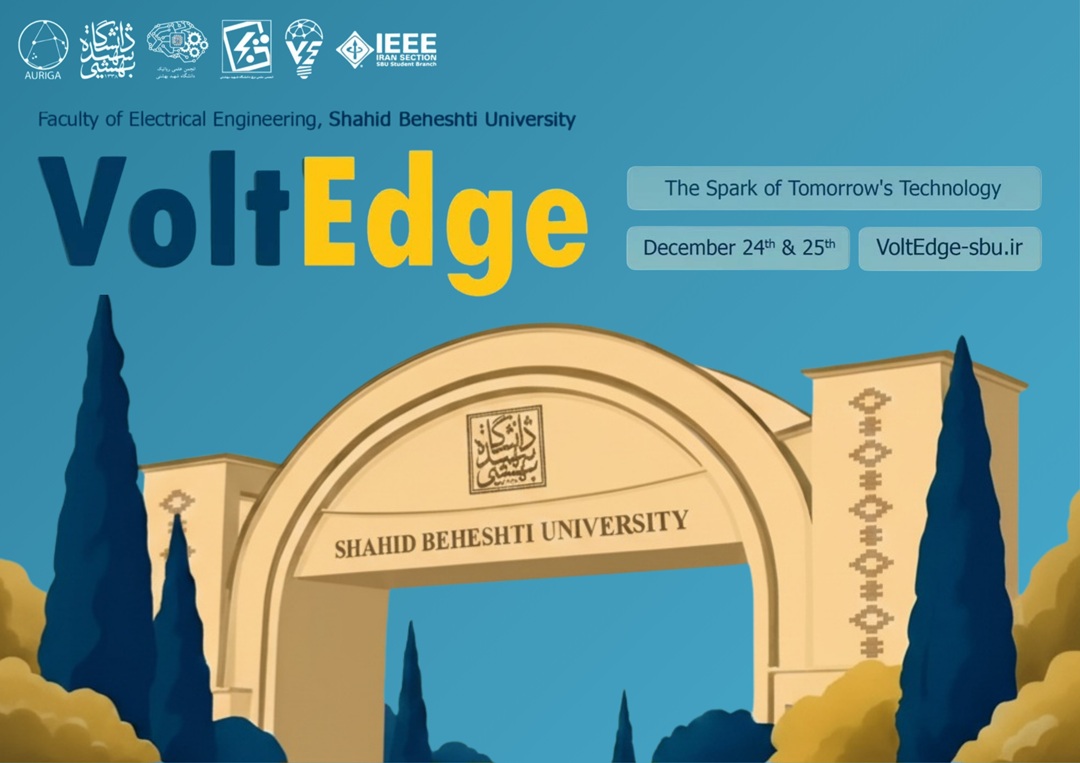
MAPNA Group President Mohammad Owliya attended the VoltEdge Scientific Event on Wednesday at Shahid Beheshti University, where he detailed the group’s most recent technological developments and research achievements in the context of the global and national energy transition.
Speaking at the event, Qwliya stressed the accelerating pace of technological change in Iran and worldwide, noting that growing energy imbalance has become more pronounced.
He reviewed the global outlook for energy sustainability through 2050 and discussed its implications for Iran’s energy sector.
He pointed to geopolitics, shifting attitudes toward environmental and energy sensitivities, and the widespread expansion of artificial intelligence and its impact on energy production and consumption as key determining variables.
Under current conditions, he emphasized, paying simultaneous attention to these factors is unavoidable as the world faces an energy crisis.
Owliya said that many trends observed until two years ago have changed. “Previously, fossil fuels and the development of thermal turbines were on a downward trend, but for at least the past year this trend has reversed.”
Power generation outlook in Iran
Presenting an analysis of Iran’s electricity sector, Owliya noted that the country’s nominal power generation capacity currently stands at around 97,000 megawatts, of which nearly 80% is supplied by fossil fuels, natural gas and thermal power plants.
He explained that, given existing investment conditions, an additional 8,000 to 9,000 megawatts of thermal power capacity is expected to be added over the next seven to eight years.
However, he said that due to lower capital intensity and higher growth potential, solar energy development is likely to attract greater attention in the near future.
Combined-cycle development
Turning to MAPNA Group’s strategies for the energy transition, Owliya said the group must offer adaptive solutions under current conditions. One of MAPNA’s key development pathways, he noted, is combined-cycle power generation based on gas turbines.
He recalled that MAPNA inaugurated its MGT-75 gas turbine last summer, which has now entered operation at Rey Power Plant.
He added that, alongside combined-cycle development, further measures are required to ensure energy security and reduce carbon emissions.
In this context, MAPNA is advancing the development of several turbines—including MGT-70, MGT-30 and MGT-75—with a particular focus on hydrogen combustion.
Owliya emphasized that developing boilers capable of supporting hydrogen-based processes is also critical, noting that in Iran hydrogen is currently used mainly as a by-product, especially in boilers.
MAPSolar and MAPflex initiatives
The MAPNA President then addressed deeper structural changes and faster movement toward renewable energy. Pointing to the importance of controlling and supporting Iran’s power grid, he introduced the MAPflex program, explaining that it focuses on developing thermal power plants specifically to support renewable energy integration.
He also described the MAPSolar initiative as a portable package comprising energy storage systems and solar panels capable of supplying electricity.
According to Owliya, the solution is designed for industrial parks and can support industries during periods of energy imbalance.
MAPsave360°: Energy efficiency
Introducing the MAPsave360° project, Owliya said another pathway MAPNA has pursued alongside renewables is energy efficiency.
He noted that Iran’s energy consumption relative to GDP is very high, creating opportunities for innovative businesses, particularly because energy-efficiency solutions require far less capital investment than thermal power development.
He added that MAPNA has achieved “very positive results” over the past two years by implementing this project in the group’s own buildings.
Owliya further explained that energy-intensive industries, especially steel, generate significant waste heat that can be recovered for power generation, heating and steam production.
He also pointed to energy-oriented housing projects focused on minimizing energy and water consumption, in which buildings are designed from the outset based on energy-efficiency principles.
Large-scale electrification
Referring to MAPNA Group’s activities in the transportation sector, Owliya highlighted the development of large-scale electrification, noting the delivery of MAPNA-produced electric buses.
He described the widespread adoption of electric transport as essential for improving air quality in major cities.
He added that large-scale electrification reduces the concentration of pollution in urban areas, while emphasizing that electric transport requires extensive infrastructure development. “Over the past two years, MAPNA Group has succeeded in producing various types of electric vehicle chargers,” he said.
During the event, MAPNA also unveiled its mobile and portable phone chargers as well as energy storage systems.
Smart greenhouses and water recycling
In the final part of his speech, Owliya described water scarcity as an acute national challenge, noting that more than 90% of Iran’s freshwater is consumed in agriculture. He then introduced MAPNA’s AGREED project, explaining that certain technologies can have large-scale impact.
As an example, he referred to greenhouses designed for optimized energy use and light control, powered by solar panels.
The AGREED project, he said, has been launched as a pilot at Genaveh Power Plant using hydroponic cultivation and water recycling.
He added that the next version of the project is being designed for colder regions, where greenhouse heating will be supplied through waste heat from cooling towers and combined-cycle boilers.
The two-day VoltEdge event at Shahid Beheshti University hosted a wide range of participants, including academics, researchers, engineers, students, industry professionals and leading companies from the science and industry sectors.