



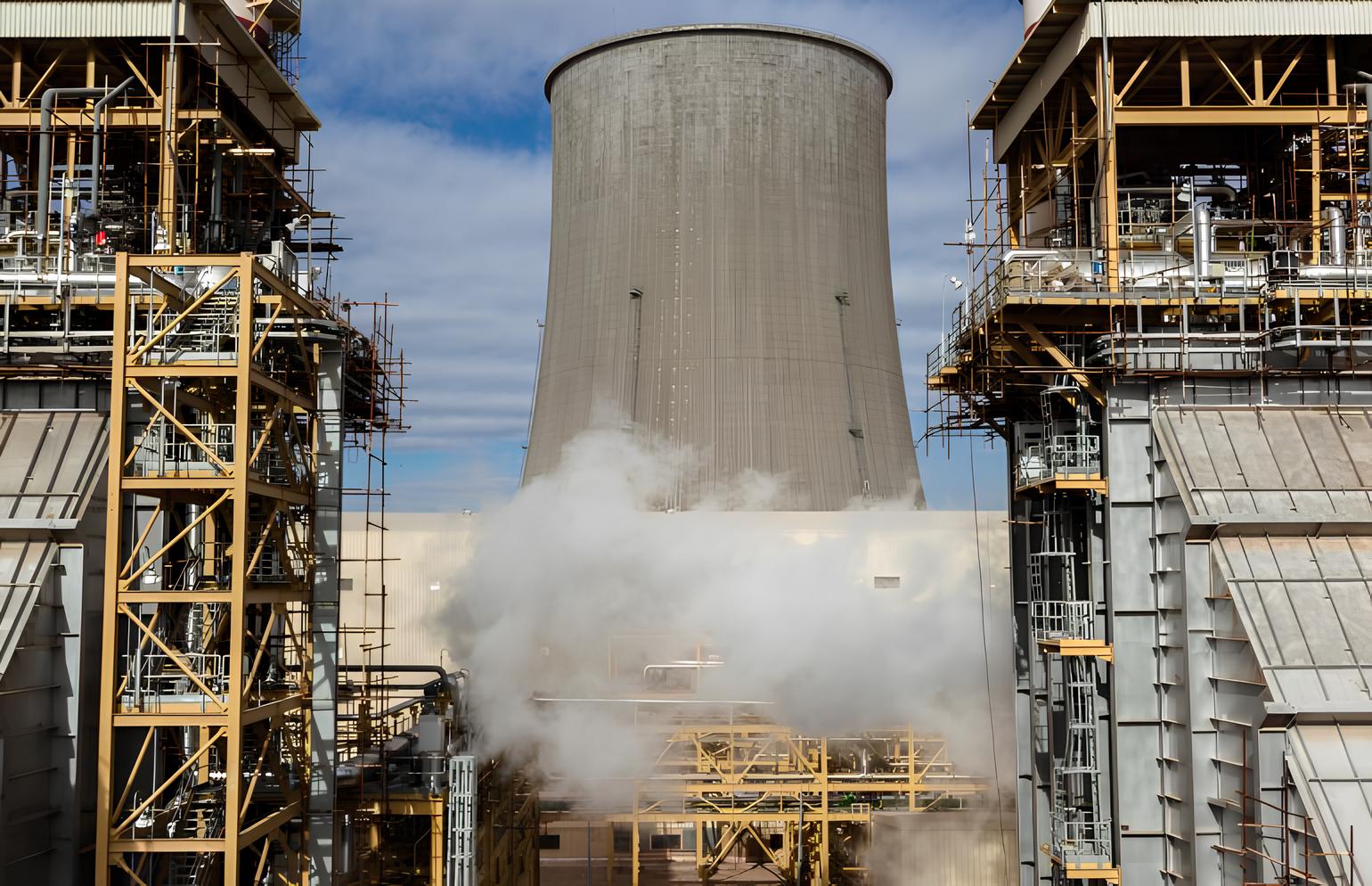
The Final Acceptance Certificate (FAC) for the steam unit and common facilities was issued on December 3, 2025, following completion by MAPNA Thermal Power Plants Development Company (MD-2).
The Shirkouh power plant is located on the Alloy Steel Special Road in Yazd Province. It consists of a single combined cycle block. MAPNA Group was responsible for basic design documentation, engineering, equipment supply, and execution of the power block under an EP scope.
The cooling system was implemented under an EPC contract. MAPNA also provided general engineering services for the entire plant and supervised commissioning activities.
The plant includes two gas units, each with a capacity of 162 megawatts, and one steam unit with a capacity of 160 megawatts. Key equipment includes V94.2 gas turbines, a Type E steam turbine, and a Heller dry cooling system.
With the permanent handover of this unit to Farab Company, the project client, the total number of power generation units delivered on a final acceptance basis by MAPNA’s MD-2 has reached 130 units. These units represent a combined installed capacity of 20,328 megawatts.
The figure reinforces the company’s role as one of the main drivers of power generation capacity expansion in Iran.
The Shirkouh Combined Cycle Power Plant relied on domestic manufacturing capacity and advanced technologies developed within MAPNA’s industrial facilities. It is regarded as a successful example of applying local expertise and modern technologies in Iran’s energy industry.
The plant plays an important role in strengthening the stability of the Yazd provincial power grid. It supports summer peak load management and supplies electricity to energy-intensive industries in the region, particularly steel and mining operations.
It also contributes significantly to meeting urban and rural household electricity demand, helping reduce potential outages. Estimates indicate the plant can supply power to hundreds of thousands of households during peak consumption periods.
Beyond electricity generation, the project has supported economic and social development in Yazd Province by creating direct and indirect employment during construction and operation, while maximizing the use of local capabilities.
From a technical perspective, stable operation under harsh climatic conditions is considered one of the project’s key achievements.
The plant was designed and commissioned to operate efficiently in high temperatures and dry, desert environments.
Environmental benefits include reduced fossil fuel consumption per megawatt and lower emissions of pollutants such as carbon dioxide (CO₂) and nitrogen oxides (NOx).